
"acetic acid"
600 article(s) found

Several acids in roasted coffee
There are mainly the following kinds of acids in roasted coffee-Zheng Wei (Italian Coffee University). According to the first edition of the chemistry of quality, there are mainly the following acids in roasted coffee: formic acid is the most in shallow roasting, and acetic acid decreases with the deepening of deep roasting, and decreases with the deepening of deep roasting.

Which varieties of coffee beans are treated with red wine to describe the taste?
Which varieties of coffee beans use the flavor description of red wine treatment to introduce the red wine treatment of coffee beans, which can also be called red wine treatment, inspired by the brewing technology of red wine. At present, only eight estates in Colombia have successfully introduced coffee beans treated in this way to the market. According to the data of these eight estates, we can roughly identify the types of red wine treatment.

Hand-brewing Coffee skill | Coffee gouache ratio | Coffee steaming skill | Coffee bean cultivation period
Hello everyone, friends will buy coffee utensils and coffee beans home to drink, the editor will often receive a variety of questions, friends' enthusiasm for discussion is also very high. So today, the editor will come to share with you some common questions of newcomers. This is the first question: do you find that you can't get into the water by injecting water into the coffee by hand? The editor tells you that this is the right thing to do.

The aroma of coffee is how it comes out. The rich aroma of coffee beans is technically fried.
Professional coffee knowledge exchange More coffee bean information Please pay attention to coffee workshop (Weixin Official Accounts cafe_style) Qianjie-coffee bean aroma source introduction Acid and sugar determine coffee flavor Acid affects coffee quality and complexity Coffee beans naturally contain some acids such as citric acid and malic acid and some acetic acid (which is decomposed or reacted by sugars and other compounds)
Coffee basics several acids in roasted coffee
There are mainly the following kinds of acids in roasted coffee-Zheng Wei (Italian Coffee University). According to the first edition of the chemistry of quality, there are mainly the following acids in roasted coffee: formic acid is the most in shallow roasting, and acetic acid decreases with the deepening of deep roasting, and decreases with the deepening of deep roasting.
Any of several acids in roasted coffee.
There are mainly the following kinds of acids in roasted coffee-Zheng Wei (Italian Coffee University). According to the first edition of the chemistry of quality, there are mainly the following acids in roasted coffee: formic acid is the most in shallow roasting, and acetic acid decreases with the deepening of deep roasting, and decreases with the deepening of deep roasting.

Any of several acids in roasted coffee.
There are mainly the following kinds of acids in roasted coffee-Zheng Wei (Italian Coffee University). According to the first edition of the chemistry of quality, there are mainly the following acids in roasted coffee: formic acid is the most in shallow roasting, and acetic acid decreases with the deepening of deep roasting, and decreases with the deepening of deep roasting.

Learn to make coffee questions and answer questions for beginners in hand brewing coffee
Professional coffee knowledge exchange more coffee bean information please follow the coffee workshop (Wechat official account cafe_style) Hello everyone, friends will buy coffee utensils and coffee beans home to make their own coffee, editors often receive a variety of hand-brewing coffee problems, friends' enthusiasm for discussion is also very high. So today, the editor is going to share with you some common things that are common to newcomers.

Introduction to the price of coffee varieties and the areas where the manor is produced.
What are the prices of washed sun red wine treated coffee varieties? the selected coffee cherries are placed in specific containers by farmers (beans used by Australian baristas in Sasa competitions are placed in metal containers). But in any case, the container should have a device similar to a red wine fermentation suppository or a single exhaust valve. So, carbon dioxide

There are mainly several kinds of acids in roasted coffee.
There are mainly the following kinds of acids in roasted coffee-Zheng Wei (Italian Coffee University). According to the first edition of the chemistry of quality, there are mainly the following acids in roasted coffee: formic acid is the most in shallow roasting, and acetic acid decreases with the deepening of deep roasting, and decreases with the deepening of deep roasting.

The proportion of hand-brewed coffee water and coffee powder hand-brewed coffee novice to understand the key skills
Professional coffee knowledge exchange More coffee bean information Please pay attention to coffee workshop (Weixin Official Accounts cafe_style) Hello everyone, small partners will buy coffee utensils and coffee beans to go home to make their own hand-brewed coffee, Xiaobian often receives various hand-brewed coffee problems, the enthusiasm of small partners to discuss is also very high. So today, Xiaobian will share with you a few common questions for newcomers.

Introduction to the description of taste and flavor of Colombian coffee bean red wine
Description of taste and flavor of Colombian coffee bean red wine according to Sasa's description in the competition, the processor injected carbon dioxide into the container to prevent oxidation from producing volatile acid, which is called lactic acid fermentation, which produces malic acid and lithic acid, which is relatively stable, so the beans fermented by lactic acid feel more mellow, with cheese.

The main components and aroma sources of coffee beans how many kinds of aroma of coffee and how to describe it?
Professional coffee knowledge exchange more coffee bean information Please pay attention to the meaning of wet and dry aroma of coffee in coffee workshop (Wechat official account cafe_style) Seven factors affecting the flavor and aroma of coffee raw beans 1. During baking, part of the sucrose, the main ingredient, will be decomposed into acetic acid, formic acid, glycolic acid and lactic acid, while the other part of the sucrose will undergo caramelization.
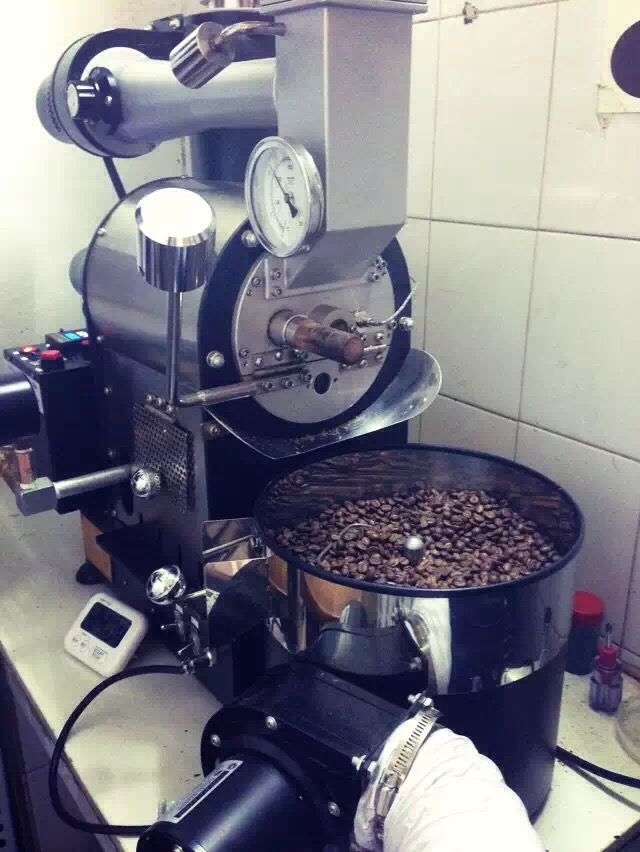
Briefly introduce the purpose and method of baking.
Generally speaking, each coffee cherry contains two raw beans, and the fragrance is still hidden, waiting to be discovered. In raw beans, it contains a lot of chloric acid. As the baking process, chloric acid will gradually disappear, releasing familiar and pleasant fruit acid-such as acetic acid, citric acid, malic acid in wine. Baking is just right to present these beautiful sour tastes in moderation; vice versa
Roasting of fine coffee determines the taste of coffee.
Generally speaking, each coffee cherry contains two raw beans, and the fragrance is still hidden, waiting to be discovered. In raw beans, it contains a lot of chloric acid. As the baking process, chloric acid will gradually disappear, releasing familiar and pleasant fruit acid-such as acetic acid, citric acid, malic acid in wine. Baking is just right, it can present these beautiful sour taste moderately; on the contrary,

Roasting of coffee beans determines coffee taste
Generally, each coffee cherry contains two green beans, and the aroma is still hidden, waiting to be discovered. In raw beans, there is a lot of chloric acid. As it bakes, the chloric acid disappears, releasing familiar and pleasant fruit acids such as acetic acid, citric acid, and malic acid found in wine. Baked properly, these beautiful sour taste can be moderately presented; conversely,
The taste of coffee is determined by roasting.
Generally speaking, each coffee cherry contains two raw beans, and the fragrance is still hidden, waiting to be discovered. In raw beans, it contains a lot of chloric acid. As the baking process, chloric acid will gradually disappear, releasing familiar and pleasant fruit acid-such as acetic acid, citric acid, malic acid in wine. Baking is just right, it can present these beautiful sour taste moderately; on the contrary,

Roasting determines the light taste of coffee.
Generally speaking, each coffee cherry contains two raw beans, and the fragrance is still hidden, waiting to be discovered. In raw beans, it contains a lot of chloric acid. As the baking process, chloric acid will gradually disappear, releasing familiar and pleasant fruit acid-such as acetic acid, citric acid, malic acid in wine. Baking is just right, it can present these beautiful sour taste moderately; on the contrary,

Treatment of raw coffee beans-there are several ways to treat coffee fruits
Coffee raw bean treatment-there are several treatment methods for coffee fruit. The basic principle is to squeeze out the soft ripe fruit of the seed by means of extrusion. The peeling machine needs to adjust the gap between the extrusion gap to avoid crushing the seed and destroying the endocarp. It causes the infection of microorganisms in the follow-up process, which makes the coffee beans have a peculiar smell, but do not leave too much pulp. This part can be rotated by the peeling machine.